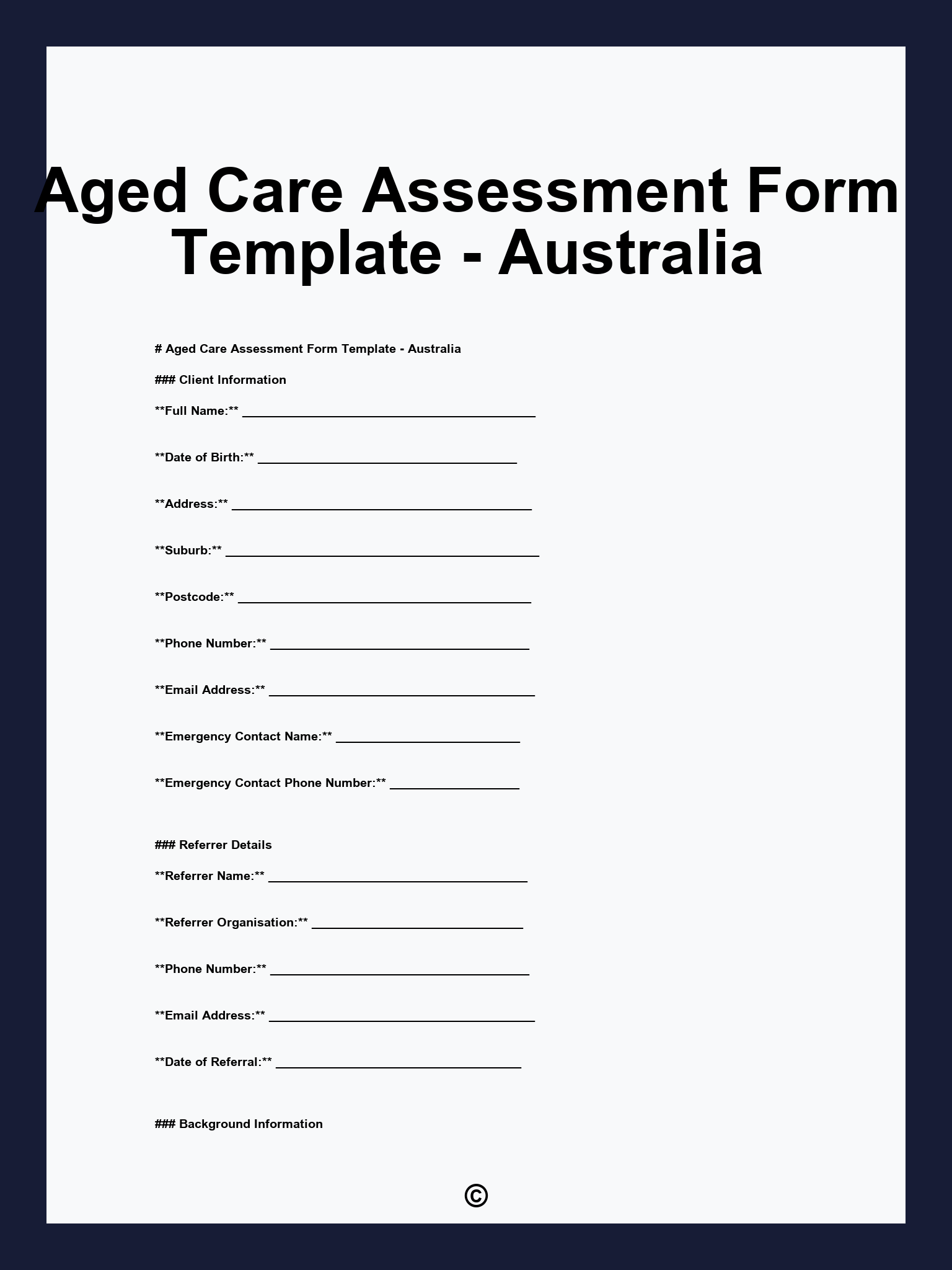
The Aged Care Assessment Form Template – Australia is offered in multiple formats, including PDF, Word, and Google Docs. Each version is designed to be both editable and printable, ensuring you have the flexibility to use it as needed.
Aged Care Assessment Form Template – Australia Editable | PrintableSample
1. Client Information 2. Assessment Purpose 3. Medical History 4. Current Support Services 5. Daily Living Activities 6. Mobility and Physical Function 7. Social and Emotional Well-being 8. Family and Carer Involvement 9. Referral Services Needed 10. Consent for Information Sharing 11. Review Date 12. Assessor Details 13. Signatures and Acceptance
PDF
WORD
Examples
[Client’s Name]
[Client’s Date of Birth]
[Client’s Address]
[Client’s Phone]
[Client’s Email]
[Assessment Date]
[Assessor’s Name]
[Assessor’s ID]
[Assessor’s Organization]
This Aged Care Assessment Form is designed to evaluate the needs of individuals seeking aged care services in Australia.
Please provide details regarding any medical conditions, medications, and treatments relevant to the client’s health.
Rate the client’s ability in areas such as bathing, dressing, eating, and mobility. Use the following scale: 1 – Independent, 2 – Needs Assistance, 3 – Dependent.
Identify the client’s support network, including family, friends, and community resources available to assist with their care.
Assess the client’s cognitive abilities and emotional state to identify any mental health support needs.
Document the client’s preferences regarding their care, including cultural needs and future goals.
[Client’s Signature]
[Assessor’s Signature]
[Date]
[Client’s Name]
[Client’s Date of Birth]
[Client’s Address]
[Client’s Phone]
[Client’s Email]
[Assessment Date]
[Assessor’s Name]
[Assessor’s Qualification]
[Assessor’s Organization]
This assessment aims to determine the eligibility and requirements for aged care services, tailored to the client’s individual needs.
Detail the client’s current health status, including chronic conditions and medications, and any medical interventions required.
Evaluate the client’s ability to perform activities of daily living (ADLs), such as hygiene, feeding, and transferring.
Include information on the client’s family background, living arrangements, and social interactions that impact their well-being.
Identify any potential risks to the client’s safety and well-being, including fall risks, mental health concerns, and abuse.
Provide tailored recommendations for the client’s care plan based on the assessment findings.
[Client’s Signature]
[Assessor’s Signature]
[Date]
Printable